

When it comes to the construction of a direct cooling workbench, understanding the materials used is crucial for both manufacturers and potential buyers. As a direct cooling workbench supplier, I am excited to delve into the various materials that go into creating these essential pieces of equipment.
Outer Shell Materials
The outer shell of a direct cooling workbench serves multiple purposes. It provides protection for the internal components, offers a durable and aesthetically pleasing appearance, and contributes to the overall insulation of the unit.
Stainless Steel
Stainless steel is one of the most commonly used materials for the outer shell of direct cooling workbenches. It is highly resistant to corrosion, making it suitable for use in environments where moisture or chemicals may be present. Stainless steel is also easy to clean and maintain, which is essential in food service and laboratory settings. Its sleek and modern appearance adds a professional touch to any workspace. For example, in a commercial kitchen, a stainless - steel direct cooling workbench not only looks great but also stands up to the rigors of daily use.
Galvanized Steel
Galvanized steel is another option for the outer shell. It is steel that has been coated with a layer of zinc to protect it from rust and corrosion. Galvanized steel is more cost - effective than stainless steel while still offering good durability. However, it may not have the same high - end look as stainless steel. It is often used in industrial settings where functionality is the primary concern and appearance is less important.
Insulation Materials
Insulation is a key factor in the performance of a direct cooling workbench. Good insulation helps to maintain a consistent temperature inside the unit, reducing energy consumption and ensuring that the stored items remain at the desired temperature.
Polyurethane Foam
Polyurethane foam is a popular insulation material used in direct cooling workbenches. It has excellent thermal insulation properties, which means it can effectively prevent heat transfer between the inside and outside of the unit. Polyurethane foam is usually injected into the walls of the workbench during the manufacturing process, creating a seamless and air - tight insulation layer. This type of insulation also helps to reduce noise from the cooling system.
Polystyrene Foam
Polystyrene foam is another option for insulation. It is less expensive than polyurethane foam but also has lower thermal insulation performance. Polystyrene foam is often used in budget - friendly direct cooling workbenches or in applications where the temperature requirements are not as strict. It is lightweight and easy to work with, which can simplify the manufacturing process.
Inner Liner Materials
The inner liner of a direct cooling workbench comes into direct contact with the stored items. It needs to be hygienic, durable, and easy to clean.
ABS Plastic
ABS (Acrylonitrile Butadiene Styrene) plastic is a common choice for the inner liner. It is strong, impact - resistant, and has a smooth surface that is easy to wipe clean. ABS plastic is also resistant to chemicals, making it suitable for use in laboratory and food service environments. In a food preparation area, an ABS - lined direct cooling workbench ensures that food is stored in a clean and safe environment.
Stainless Steel
Stainless steel can also be used as an inner liner. It offers the same benefits as when used for the outer shell, such as corrosion resistance and ease of cleaning. A stainless - steel inner liner is often preferred in high - end direct cooling workbenches or in applications where a high level of hygiene is required, such as in a medical laboratory.
Cooling System Components
The cooling system is the heart of a direct cooling workbench, and several materials are used in its construction.
Copper Tubing
Copper tubing is widely used in the cooling system of direct cooling workbenches. Copper is an excellent conductor of heat, which allows for efficient heat transfer between the refrigerant and the surrounding environment. It is also malleable, making it easy to bend and shape into the required configurations for the cooling coils. Copper tubing is resistant to corrosion, ensuring a long - lasting and reliable cooling system.
Aluminum Fins
Aluminum fins are often attached to the copper tubing in the cooling coils. Aluminum is lightweight and has good heat - dissipating properties. The fins increase the surface area of the cooling coils, allowing for more efficient heat exchange. This helps to improve the overall cooling performance of the direct cooling workbench.
Compressor
The compressor is the most important component of the cooling system. It is typically made of cast iron or aluminum alloy. Cast iron compressors are known for their durability and ability to handle high - pressure applications. Aluminum alloy compressors are lighter and more energy - efficient. The choice between the two depends on the specific requirements of the direct cooling workbench, such as its size and cooling capacity.
Worktop Materials
The worktop is the surface where food preparation or other tasks are carried out. It needs to be strong, hygienic, and easy to clean.
Stainless Steel
As with the outer shell and inner liner, stainless steel is a popular choice for the worktop. It is resistant to scratches, stains, and bacteria. A stainless - steel worktop can withstand the use of sharp knives and heavy equipment without getting damaged. In a bakery, for example, a stainless - steel direct cooling workbench with a sturdy worktop can handle the kneading and rolling of dough.
Solid Surface Materials
Solid surface materials, such as Corian, are also used for worktops. They offer a seamless and non - porous surface that is easy to clean and maintain. Solid surface worktops can be customized in terms of color and shape, providing a more aesthetically pleasing option. However, they may be more expensive than stainless - steel worktops.

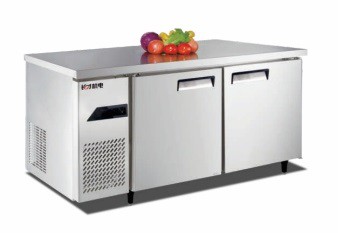
Our Product Range
We offer a variety of direct cooling workbenches to meet different customer needs. Our 1.5m Diret Cooling Frozen Workbench is a great choice for medium - sized commercial kitchens. It is constructed with high - quality stainless steel for the outer shell and inner liner, and uses polyurethane foam for insulation. The worktop is made of thick - gauge stainless steel, providing a durable and hygienic surface for food preparation.
Our 1.8m Diret Cooling Frozen Workbench is ideal for larger kitchens or food processing facilities. It has a more powerful cooling system with a high - capacity compressor and efficient copper - aluminum cooling coils. The insulation ensures that the internal temperature remains stable, even in a busy environment.
For those with limited space, our 1.2m Diret Cooling Under Counter Fridge Freezer is a perfect solution. It combines the functionality of a fridge - freezer with a worktop, making it a versatile addition to any small kitchen or laboratory.
Conclusion
The construction of a direct cooling workbench involves a careful selection of materials to ensure its performance, durability, and hygiene. From the outer shell to the cooling system components, each material plays a vital role in the overall functionality of the unit. As a direct cooling workbench supplier, we are committed to using high - quality materials in our products to provide our customers with reliable and efficient solutions.
If you are interested in our direct cooling workbenches or have any questions about the materials used in their construction, please feel free to contact us for procurement and further discussions. We look forward to serving you and helping you find the perfect direct cooling workbench for your needs.
References
- "Handbook of Refrigeration Technology"
- "Materials Science and Engineering: An Introduction"
- Industry reports on commercial refrigeration equipment